- Biodiversity loss is emerging as a systemic economic risk, affecting supply chains, financial stability and long-term growth across sectors, argues a new assessment from the Intergovernmental Platform on Biodiversity and Ecosystem Services (IPBES).
- Despite widespread dependence on nature, an estimated $7.3 trillion in annual finance still flows to activities that harm biodiversity, far outweighing conservation spending, says the report.
- Few companies currently disclose biodiversity impacts, and measurement remains uneven, though existing tools can already inform operational and portfolio decisions.
- Without changes in incentives, policy and financial systems, what is profitable will often remain misaligned with what sustains the natural systems on which the economy depends, says IPBES.

In Manchester this week, governments endorsed a report that tries to do something business has long resisted: treat biodiversity as economically material. The new assessment from the Intergovernmental Platform on Biodiversity and Ecosystem Services (IPBES) argues that the loss of nature is no longer an environmental side issue. It is a systemic risk to firms, financial stability and long-term growth.
The claim rests on a simple observation. All businesses depend, directly or indirectly, on living systems. Crops require pollination and soil fertility. Hydropower depends on stable watersheds. Insurers price flood risk. Even companies that appear distant from forests or reefs rely on supply chains shaped by water availability, climate regulation and the steady functioning of ecosystems. Since 1992, human-produced capital per person has roughly doubled, while stocks of natural capital have fallen by nearly 40%. The economy has grown, but part of the asset base on which it rests has been drawn down.
The report places these trends in financial terms. In 2023, an estimated $7.3 trillion in public and private finance flowed into activities with direct negative impacts on nature. Around two-thirds came from private finance. By contrast, roughly $220 billion was directed toward conservation and restoration. Harmful subsidies alone amounted to about $2.4 trillion. The imbalance is stark. It suggests that markets and policy still reward degradation more reliably than stewardship.
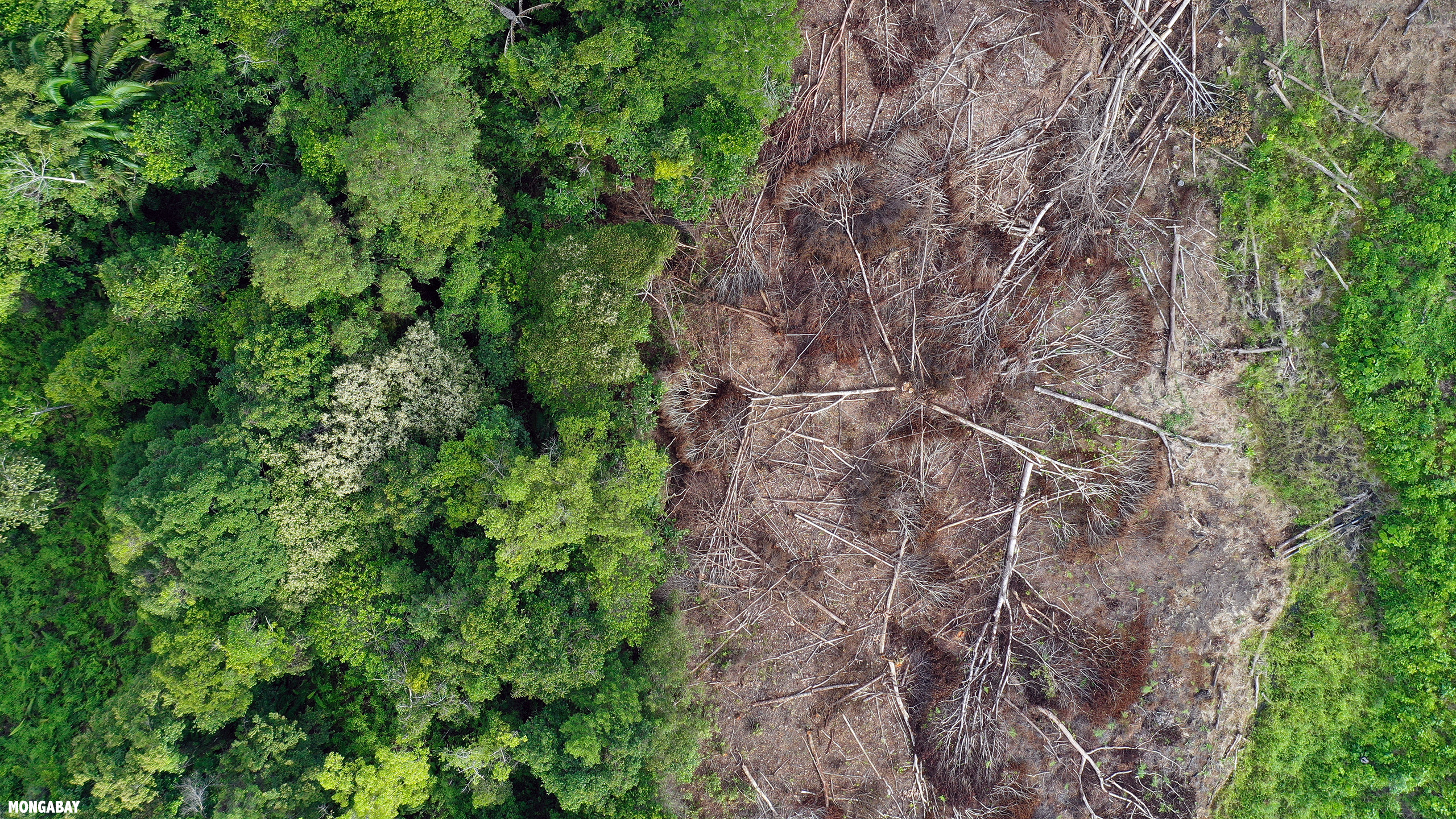
For companies, the implications are practical, the assessment argues. Biodiversity loss creates physical risks, such as crop failure or supply disruption. It also brings transition risks, as regulation tightens or consumer expectations shift. In some cases, cumulative impacts can cross ecological tipping points, with consequences that are difficult to reverse. The report describes these as systemic risks. They may not remain confined to particular sectors.
Yet disclosure remains limited. Fewer than 1% of publicly reporting companies mention biodiversity impacts in their reports. Among financial institutions representing roughly 30% of global market capitalization, the most frequently cited barriers to assessing nature-related risk are access to reliable data, models and scenarios. Businesses often lack clarity about how to measure dependencies, particularly those that are less tangible, such as cultural or regulating services.
The assessment does not present a single metric or tool. Instead, it sets out a framework. Different decisions require different methods. Site-level operations may call for location-based data and participatory monitoring. Portfolio-level decisions may rely on life-cycle analysis or macro-scale models. The authors propose three criteria for selecting methods: coverage, accuracy and responsiveness. No approach satisfies all three perfectly. Even imperfect information, they argue, can inform action.

A recurring theme is incentives. Under current conditions, what is profitable frequently conflicts with what is beneficial for biodiversity. Ecological regeneration unfolds over decades; earnings are reported quarterly. Many impacts are externalized. The report suggests that without changes in policy, finance and social norms, voluntary corporate action will not suffice. Governments can reform subsidies, mandate disclosure and adjust fiscal tools. Financial institutions can shift portfolios and develop instruments that reward conservation. Civil society can press for transparency.
The document also highlights distributional concerns. Industrial development threatens about 60% of Indigenous lands globally, and nearly a quarter of Indigenous territories are under high pressure from resource exploitation. These communities often bear disproportionate ecological and cultural costs. Their knowledge systems are rarely integrated into business decision-making, though the report argues that structured collaboration could improve risk management and outcomes.
There are, to be sure, limits to what measurement can achieve. Quantifying complex ecosystems in comparable units is difficult. Not all values are monetary. Nor is it obvious that new metrics will overcome entrenched political economy. Businesses differ in scale, sector and geography. Small firms in developing countries face constraints that multinational corporations do not.
Still, the assessment reflects a shift in emphasis. Biodiversity is framed less as a moral appeal and more as an economic condition. The question is not only how companies affect nature, but how nature’s decline affects companies. The report avoids predictions of imminent collapse. It does not claim that conservation guarantees profit. Instead, it suggests that continued erosion of natural systems will narrow the space within which markets function predictably.
In that sense, the business case for biodiversity is less about opportunity than about continuity. Modern economies were built on an implicit assumption that ecological stability could be taken for granted. The evidence now suggests otherwise. If nature is an asset, it is one that has been undervalued and overspent. Whether firms and financiers adjust their models accordingly will shape not only environmental outcomes, but the resilience of the economy itself.
Citation:
- Jones, M., Polasky, S., Rueda, X., Brooks, S., Ingram, J. C., von Hase, A., Egoh, B., Kohsaka, R., Kulak, M., Leach, K., Loyola, R., Mandle, L., Rodriguez Osuna, V., Schaafsma, M., & Sonter, L. (2026). IPBES Business and Biodiversity Assessment: Summary for Policymakers. Zenodo. https://doi.org/10.5281/zenodo.18538597
Header image: Mangroves, coral reef, palm trees, and forest in Raja Ampat. Photo by Rhett Ayers Butler
Credits