Congress Squanders Last Chance to Block Venezuela War Before Going on Vacation
Written by admin on December 18, 2025
The House voted down a pair of measures to halt strikes on alleged drug boats and on Venezuelan land on Wednesday, hours after President Donald Trump announced a blockade on the South American country.
Democrats sponsoring the measures were able to peel off only two Republicans on the first vote and three on the second as the GOP rallied around the White House.
On Tuesday, Trump announced a partial blockade — considered an act of war in international law — against Venezuela after weeks of threatening military action.
“If we intensify hostilities in Venezuela, we have no idea what we’re walking into.”
The votes Wednesday may have been lawmakers’ last chance to push back on Trump before Congress’s end-of-year break. A vote on a bipartisan measure in the Senate blocking land strikes is pending.
The House voted 216-210 against the drug boats measure and 213-211 against the land strikes measure. Both would have required Trump to seek congressional authorization for further attacks.
The lead sponsor of the measure blocking an attack on Venezuela, Rep. Jim McGovern, D-Mass., said Trump seemed to be rushing headlong into a war without making the case for it.
“Americans do not want another Iraq. If we intensify hostilities in Venezuela, we have no idea what we’re walking into,” McGovern said. “At least George Bush had the decency to come to Congress for approval in 2002. Don’t the American people deserve that respect today?”
Bush in 2002 sought and received a formal authorization for his attack on Iraq. Without taking any similar steps, Trump has massed thousands of American service members in the Caribbean without formal approval.
Rumors began to swirl in right-wing circles before the vote that Trump would use a Wednesday evening televised address to announce U.S. attacks targeted directly at Venezuela — strikes that could be salvos in a regime-change war against President Nicolás Maduro.
In the absence of outreach from the White House, Democrats forced votes to block unauthorized strikes on both the boats and Venezuelan land under the War Powers Resolution, a 1973 law meant to limit the power of U.S. presidents to wage war without congressional approval.
Trans-Partisan or Not?
Earlier attempts in the Senate to stop both the drug boat strikes and an attack on Venezuela under the war powers law have failed on mostly party-line votes. Wednesday represented the first instance that representatives have faced similar questions, making it a key public test.
The vote on a measure banning attacks on alleged drug boats came first. From the start, it was poised to earn less support from Republicans, whose base widely supports the strikes at sea. Few GOP lawmakers wavered despite renewed criticism of the Trump administration over a second attack, first reported by The Intercept, that killed the survivors of an initial strike on an alleged drug boat on September 2.
House Foreign Affairs Committee Chair Brian Mast, R-Fla., argued Wednesday that Trump has the legal authority to act against the “imminent threat” of illegal drugs.
“Every drug boat sunk is literally drugs not coming to the United States of America,” he said. “Democrats are putting forward a resolution to say the president cannot do anything about MS-13 or Tren de Aragua” — two Latin American gangs frequently invoked by drug war hawks — “and every other cartel. That is giving aid and comfort to narco-terrorism.”
“I’m still waiting to hear why major drug dealers were pardoned by the president of the United States.”
The debate grew heated at one point, with Mast suggesting that Foreign Affairs ranking member Rep. Gregory Meeks, D-N.Y., did not care about the nearly 200 overdoses in his district last year.
In response, Meeks noted that Venezuela is not a major source of the drug that has driven the overdose crisis, fentanyl. He also asked over and over again why Trump had pardoned former Honduran President Juan Orlando Hernández, who was convicted of drug trafficking, as well as the founder of the darknet drug network Silk Road, Ross Ulbricht.
“I’m still waiting to hear why major drug dealers — two major drug dealers — were pardoned by the president of the United States. I’ll wait,” Meeks said at one point, taking a long pause. “Nothing?”
Reps. Thomas Massie, R-Ky., and Don Bacon, R-Neb., were the only Republicans to vote in favor of halting the boat strikes. Democratic Reps. Henry Cuellar and Vicente Gonzalez, who represent Texas districts near the southern border, broke with their party to vote against it.
Land Attack?
The other measure, blocking attacks on Venezuelan land without approval from Congress, seemed poised to draw more GOP support. Massie and Bacon co-sponsored the proposal.
The White House has failed to ask Congress for a declaration of war as the Constitution requires, Massie told his colleagues.
“Do we want a miniature Afghanistan in the Western hemisphere? If that cost is acceptable to this Congress, we should vote on it, as the voice of the people, and in accordance with our Constitution,” Massie said.
Advocates’ hope for a cross-partisan coalition between Democrats and MAGA Republicans opposed to regime-change wars was dashed, however, under pressure from GOP leaders who said the measures were nothing more than a swipe at Trump.
“This resolution reads as if Maduro wrote it himself. It gives a narco-terrorist dictator a free pass to keep trafficking drugs,” Mast said of McGovern’s measure. “Because it appears Democrats hate President Trump more than they love America.”
Ultimately, Rep. Marjorie Taylor Greene of Georgia was the only other Republican who joined Massie and Bacon to vote in favor of the measure. Cuellar was the only Democrat to vote against it.
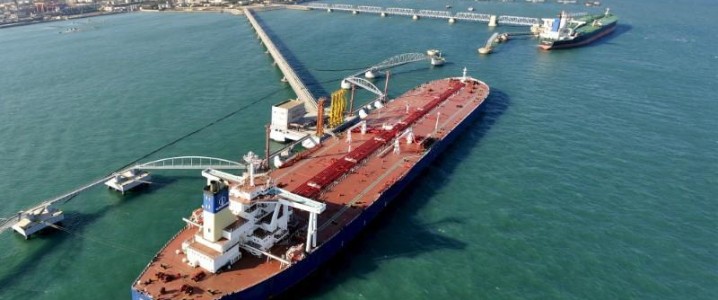
The votes came a day after Trump announced a blockade of Venezuela, which depends on trade using sanctioned oil tankers for a large share of its revenue.
Blockades are acts of war, according to the Center for International Policy, a left-leaning think tank.
“Trump was elected on a promise to end wars, not start them,” Matt Duss, the center’s executive vice-president, said in a statement. “Not only is he breaking that promise, his aggression toward Venezuela echoes the worst moments of American imperialist violence and domination in Latin America. We should be moving away from that history, not rebooting it.”