Claudette Colvin’s life should teach us this: resistance is collective, and it never stops | Gary Younge
Written by admin on January 17, 2026
“In life, there’s the beginning and the end,” John Carlos, the African American sprinter who raised his fist in a black power salute from the podium of the 1968 Olympics, once told me. “The beginning don’t matter. The end don’t matter. All that matters is what you do in between – whether you’re prepared to do what it takes to make change. There has to be physical and material sacrifice. When all the dust settles and we’re getting ready to play down for the ninth inning, the greatest reward is to know that you did your job when you were here on the planet.”
Claudette Colvin, who died earlier this week in a hospice in Texas, did her job while she was here on the planet, although it was several decades before her physical and material sacrifice was acknowledged. On 2 March 1955 in Montgomery, Alabama, aged just 15, Colvin took a stand and refused to give up her bus seat to a white woman.
The driver called the police, who kicked her a few times and then, when she still stayed put, took her to City Hall and charged her. Fred Gray, her lawyer, thought she would make a strong test case to end segregation in the city. But levels of hierarchy in the deep south did not stop at black and white. The church-led, male-dominated leadership considered Colvin a liability – not only was she young, rebellious and outspoken, she was dark-skinned in a world where shade mattered, and poor. “The black leadership in Montgomery at the time thought that we should wait,” said Gray.
Nine months later, Rosa Parks suffered a similar fate after she too refused to give up her bus seat to a white passenger. Local leaders thought she was an ideal candidate: “I probably would’ve examined a dozen more before I got there if Rosa Parks hadn’t come along,” said a local leader, ED Nixon.
In between the two arrests, Colvin fell pregnant and, for several decades, into the footnotes of history. When I interviewed her at her home in the Bronx 45 years later, she was working as a nurses’ aide in a care home in Manhattan, mostly unheard of and completely uncelebrated.
“[There is] a system of power that is always deciding in the name of humanity who deserves to be remembered and who deserves to be forgotten,” the Uruguayan writer Eduardo Galeano, once told me. “We are much more than we are told. We are much more beautiful.” Eventually, well into her 60s, Colvin’s story broke through that system. Her obituary this week appeared, among other places, in the New York Times, the BBC, the Washington Post, Le Monde and even the Telegraph.
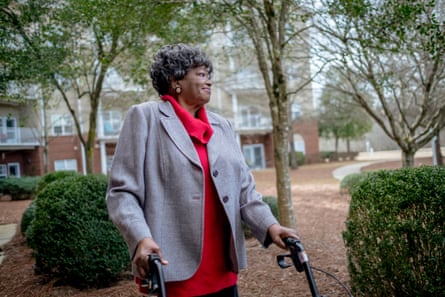
There are many lessons we might learn from Colvin’s life and brave actions, but for now I want to concentrate on just four that feel urgent and relevant. The first is that popular history is made by ordinary people, like Colvin, doing extraordinary things – but it is all too often written as though it were the work of saints in a crude morality play. This is not only untrue; it demeans everyone implicated, including the sanctified. In the case of the Montgomery bus boycott, Parks is depicted as a seamstress who just happened to be in the wrong place at the right time. “She was a victim of both the forces of history and the forces of destiny,” said Martin Luther King, who, as a young preacher in town, was chosen to lead the fightback. Parks was nobody’s victim. She was a militant feminist and anti-racist who had a good personal relationship with Dr King, but her hero was Malcolm X. “I had almost a life history of being rebellious against being mistreated against my colour,” she said.
Second, the fact that inequalities of race, class, gender and shade mean that some people are more likely to be honoured in history and promoted in politics, detracts not one iota from the bravery or salience of their actions.
Last September, Silverio Villegas González was shot dead in Chicago by a US Immigration and Customs Enforcement (ICE) agent who claimed he feared for his life. Villegas González was an undocumented migrant and there is no video to contradict the ICE account. Renee Good, who was shot dead in Minneapolis last week by an ICE agent while peacefully protesting against an ICE raid, has been commemorated around the world. The fact that Good was a white, US citizen of course plays a role in why she is remembered in a way that Villegas González and so many others are not. The challenge here is not to diminish her sacrifice and bravery, but to also call Villegas González’s name, as we should call Colvin’s. Colvin resented the fact that her protest left her vulnerable and she should have had more support. But she understood why they had championed Parks and not her. “They picked the right person,” she told me. “They needed someone who would bring together all the classes. They wouldn’t have followed me.”
Third, that ultimately the story of Montgomery isn’t about Colvin or Parks, any more than the story of immigration rights is ultimately about Good or Villegas González. The struggle against segregation demanded organisation – most of it by women – and thousands working together, to make change. It was only after the black community boycotted the buses for 13 months that Montgomery’s local establishment finally relented. An individual may resist, but resistance is collective.
Finally, that resistance never stops. The very rights Colvin fought for are being rolled back today. Key elements of civil rights and voting rights protections are being reversed. Last week Donald Trump said he thought civil rights had led to “white people [being] very badly treated”.
When Colvin was asked if she would help promote the opening of the Rosa Parks museum on the grounds that it might bring her closure, she refused. “What closure can there be for me?” she asked me. “There is no closure. This does not belong in a museum, because this struggle is not over. We still don’t have all that we should have. And, personally, there can be no closure. They took away my life. If they want closure, they should give it to my grandchildren.”
-
Gary Younge is a professor of sociology at the University of Manchester