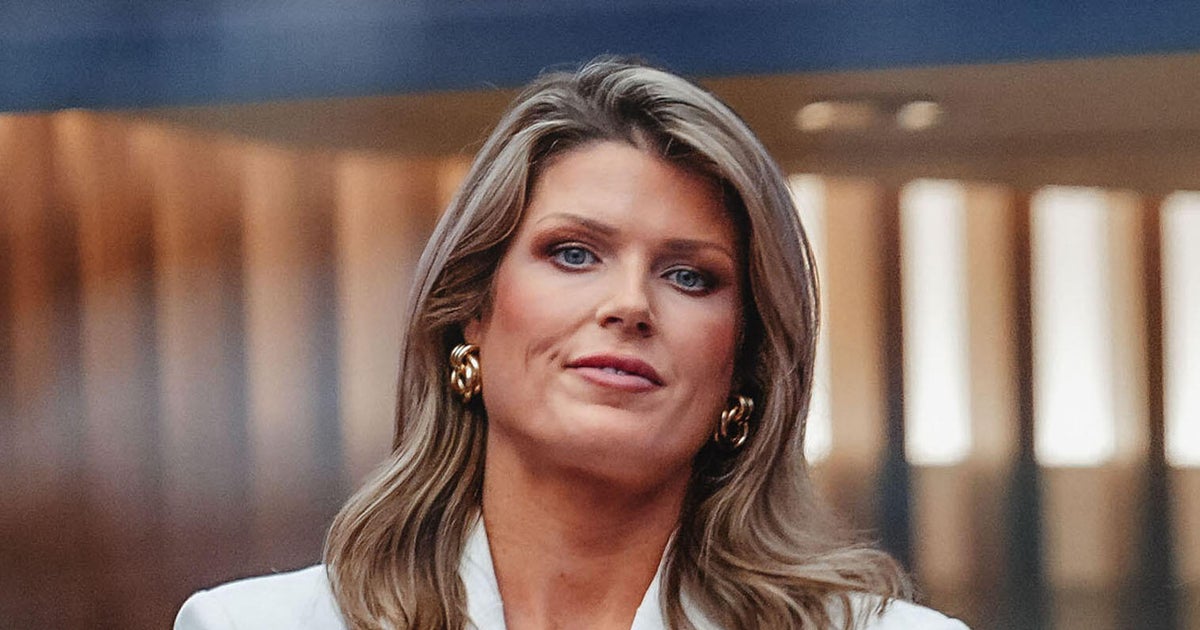
Amanda Seyfried Loves Musicals, But Will Never Star in One on Broadway
Written by admin on December 16, 2025
“I’m dead tired,” says Amanda Seyfried when asked how she’s doing, juggling two movies that are opening one week apart. “I got a Vitamin D shot today, which I haven’t done in like 10 years.”
Still, Seyfried is surprisingly energetic during our interview for Little Gold Men. Maybe it’s the Vitamin D shot; maybe it’s because she’s proud of both performances. In The Housemaid, which opens in theaters December 19, she plays a wealthy mother who hires a young woman with a troubled past (Sydney Sweeney) as her live-in housemaid. The psychological thriller, adapted from a popular novel and directed by Paul Feig, is a wild, campy ride—and Seyfried gets to play a dynamic character that surprises at every turn.
Meanwhile, in The Testament of Ann Lee, out December 25, Seyfried delivers on perhaps the most demanding role of her career, playing the founder of a religious sect, the Shakers. The bold period piece, directed by The Brutalist co-writer Mona Fastvold, follows Lee as she struggles to lead a movement while under intense persecution—and it’s also a musical. Seyfried sings mesmerizing songs and performs dances inspired by the Shakers’ historical physical behaviors—shaking, rattling, and rolling in religious ecstasy.
Seyfried’s career is studded with musicals, from her role in Mamma Mia! and its sequel to her role as Cosette in the 2012 adaptation of Les Misérables. But Ann Lee was a different animal, with original songs and ecstatic dancing that capture Ann being taken over by a higher power. Seyfried’s deeply committed performance had her pushing herself in every way.
Here, she tells Little Gold Men (listen or read on below) what she had to do to transform into Ann Lee, why she sympathizes with her Housemaid costar Sweeney, and her surprising passion for taxidermy.
Vanity Fair: What was your initial approach to playing Ann Lee?
Amanda Seyfried: I needed to dig my heels into some kind of reality that maybe I’m a good enough actor that I can play someone so far away from anything I’ve ever done—in terms of era, in terms of empowerment, in terms of the fact that she was from Manchester, England. It’s so scary to commit to something that feels so foreign. I’m a very brave actor. I do feel like most of my courage is in my work, and I’d love for that to bleed into my life. Even with all that courage and confidence and excitement, I’m still like, “How can I possibly relate to somebody who survived in the 18th century and lost four of her children and started a religious movement?” I just had to hold on to the idea that I am absolutely good enough, and I just need to work my ass off.
So much of this story is about faith. What was your perspective on religion and faith, and did playing Ann Lee change it?
I appreciate religion for so many reasons, mainly that it makes people feel like there is a greater purpose. It makes them feel safe. It unites people in a way that is so positive in so many ways. I am not religious. I was brought up in the United Church of Christ, where I went every Sunday. I was confirmed. I would say I’m agnostic, but I think Mother Nature is my higher power, for sure. I feel the most at peace and the most spiritual and the most connected to something bigger than me when I’m in the woods, or when I’m with animals.

Seyfried in The Testament of Ann Lee.
William Rexer/Searchlight Pictures/Everett Collection.
What was it like learning the film’s choreography? What did it feel like for your body?
At first, it feels really incredibly exhausting and annoying because my brain doesn’t collect data fast enough, or doesn’t remember data fast enough. It’s frustrating. I’m not a natural mover. However, the end result and the reason behind it all was so important. There’s a rigidity to certain shaker movements, and there’s also a freedom and an openness. I’ve never moved like that. But once I knew them, I got further embedded into this story and into what Ann Lee may have been feeling and thinking, and I took everything that I had in those moments in my body. It’s a beautiful thing to express yourself through movement, and then when you add singing and breath and just engaging in your body in this way, to express somebody’s pain. It enhances the whole acting experience, which is why I love musicals so much.
Were you looking for another musical opportunity?
I’m always, always ready to do the next musical. Always.
Do you feel like you’ve changed in that respect as a performer?
I’m exactly the same. I think the more ways of expressing yourself, the better. The nature of learning those choreographed moves, it’s a real bitch. But when you get to the other side of it, like anything, it’s such a wonderful feeling. It just takes you deeper into wherever you are, and it makes you feel alive. That’s why we dance. That’s why we sing.
I’m not a musically gifted person, so I love to watch people such as you sing.
I’m always striving to just be a little better. But this movie has made me step back a bit and appreciate what I already have. My voice coach is like, “Where have you been?” because I’ve known her for so long, and I’m like, “I’m okay now.” I think my plan was to do a musical on Broadway, and then I made the decision to never put myself through that—because to be honest, my stage fright is like, life’s too short. When I decided that I wasn’t gonna do that for the foreseeable future, I just took a step back from voice lessons. I remember that day on set, actually. I was in Budapest, and I remember thinking I’d had two nightmares back to back about doing this musical on Broadway. I was just talking to my agent in a little break in my corseted dress and thinking, “I can’t put myself through that.” It’s a devastating thing to uncover about myself, but it doesn’t mean I’m weak. It just means that I know myself well enough to know that this will break me—and that was really liberating.
So that epiphany came on while shooting this?
I think it also had to do with the fact that I was singing all day long, moving in the heat, and I was like, “I couldn’t do this for six months.”
Like Ann Lee, seeing The Housemaid in theaters is a wild experience. The audience is really interacting with it, especially with the twists and turns towards the end.
It was the only movie that I’ve seen that shocked me as I was watching it. Even though I know the story, even though I know what I did on that day, I still was more of an audience member than I’ve ever been at my own movie, and I’m not surprised that it turned out this good. Paul Feig is one of the greats, and I’ve been dying to work with him for years. Like a decade.

Seyfried with Sweeney in The Housemaid.
Daniel McFadden/Lionsgate/Everett Collection.
You and Sydney Sweeney have amazing chemistry together, and it made me think about how she’s having this breakout moment now—similar to the one you had after Mean Girls. How do you view how she’s had to handle that moment, when the fame really becomes a part of your job?
I don’t envy anything she’s going through. I’ve spent a lot of time with her; we just hit it off immediately. She’s a sweetheart. She’s a very generous, kind person at her core. I have to be honest: I did not have a moment like she’s having ever. [My Mean Girls costar] Lindsay Lohan, we’re buddies, and it’s really, really, really harmful to people to have that kind of overnight spotlight. Because any press, good or bad, is still a blinding spotlight, and you have to maneuver and negotiate your way around it and outside of it. It’s acrobatics that I don’t think most people are capable of figuring it out at that age.
It’s just dangerous, because when you have people shitting on you—or idolizing you and following you around—it can’t be good for your psyche. It can’t make you feel safe in the world. But I actually admire the way Syd shows up for work. She always has a smile on her face, even if she’s miserable. I hope it doesn’t change. I hope she doesn’t harden. I just want to keep watching her work. I have really great women in my life, great actors that I’ve gotten to work with and who have championed me.
Who were some of your early champions?
I mean, Cher, of course. But also, Jeanne Tripplehorn played my mom for years [on HBO series Big Love], and she made me feel like a professional. She made me feel like I was appreciated as an adult. And then working with Julianne Moore in my early twenties [in the 2009 film Chloe]—she’s also just so good and so professional, but also has a lot of fun. Being seen as an adult and being appreciated for my work, but also understanding that I’m younger and leaving room for me, is just what was a wonderful thing.
Do you have a role from your past that holds a special place in your heart, one that maybe isn’t one of the roles that people stop you on the street for?
Chloe, the movie I did with Julianne Moore, holds a special place in my heart. It was a really scary, intimidating part to take on, but I knew for certain that I needed to do. I knew that it was going to challenge me in ways that were gonna shift the industry’s perspective on me, and my own self-worth as an actor. I felt like a better actor because of it, and I felt like people had seen a different side of me. I’d proven something.
Outside of acting, what do you nerd out about?
I am obsessed with yarn and crocheting and embroidery and art. I love fiber arts. I love creating things that I could give to people. I think it’s super, super fun, and it gets me up in the morning. If I didn’t have it, I would probably sit around and scroll on my phone. It’s my therapy. Give me a 10-hour plane ride. Give it to me.
You’ll have a purse by the end of that plane ride.
I can’t tell you how many times my ball of yarn has rolled down the aisle. It is so uncomfortable. It is so awkward because I’m on my knees in the very, very thin aisles, looking for my ball.
What is your most treasured possession?
My most treasured possession is my dog’s fur. He’s not dead yet, but he will be, and I’ll still have it. Isabella Rossellini keeps telling me to send it to her person, the fur, so her spinner will spin fur that looks like Finn’s fur from a goat cashmere, or sheep. She’s gonna make a mix of his fur because his fur can’t spin on its own.
What is your greatest extravagance?
Taxidermy.
You have a lot in your house?
Actually, [the studio behind The Housemaid] Lionsgate got me a duck last night that is in the back of the car waiting to go upstate. But I have Beatrice [an owl]. I have a tiny zebra that I got from Seth MacFarlane. A horse, like a little miniature pony. I have a fox who lives with my best friend for safekeeping, and I have two raccoons playing poker. I got that for my birthday from my husband. I have this taxidermy cat I bought from Deyrolle, which is my main taxidermy dealer, and it’s in France. It was just their house cat that wasn’t for sale. I begged for it, and he was like, “Okay, you can have it.” It’s well done, and it’s in the window. So when you enter my house, it’s the first thing you see, and nobody ever knows that it’s taxidermy. They always go up to it, and they’re always terrified. And I love that for them.
-
Exclusive: Susie Wiles, JD Vance, and the “Junkyard Dogs”: The White House Chief of Staff On Trump’s Second Term (Part 1 of 2)
-
Exclusive: Susie Wiles Talks Epstein Files, Pete Hegseth’s War Tactics, Retribution, and More (Part 2 of 2)