- As native forest logging ends in parts of Australia, governments and industry are turning to large-scale forest thinning as a tool to reduce bushfire risk, prompting a new debate over how best to protect communities in a warming climate.
- Research shows thinning can lower fire severity under some conditions, especially when paired with prescribed burning, but its effectiveness often diminishes during extreme fire weather — the very conditions driving the most destructive fires.
- Scientists warn that removing trees can alter forest structure, dry fuels, release stored carbon, and eliminate critical wildlife habitat, meaning the ecological and climate costs may be substantial in high-conservation forests.
- The controversy reflects deeper tensions over land use, public safety, and economic transition, with critics arguing that large-scale thinning risks becoming logging by another name while supporters see it as a necessary adaptation to escalating fire danger.

In the aftermath of Australia’s “Black Summer” bushfires of 2019–20, few policy questions have proved as persistent as how, exactly, to live with fire on a warming continent. Governments promise resilience. Communities demand safety. And industries facing declining markets look for new purposes. Out of this mix has emerged an unlikely battleground: the thinning of native forests.
Mechanical thinning — the selective removal of trees to reduce stand density — has long been a conventional forestry practice. What is new is its political repositioning. In Victoria and Western Australia, where governments have largely halted native forest logging, industry advocates now present thinning as a public-interest service: a tool to reduce fuel loads, moderate fire behavior, and protect towns. Critics counter that the same activity, carried out at scale, risks becoming logging by another name.
A recent perspective paper in Biological Conservation, Ecological trade-offs of mechanical thinning in temperate forests, provides a useful anchor for the debate. Its authors, including David Lindenmayer and colleagues, do not dismiss thinning outright. Instead they catalog a series of trade-offs that are often underplayed in policy discussions: impacts on biodiversity, carbon storage, hydrology, soils, and even fire dynamics themselves. Mechanical thinning, they note, can reduce competition among trees and sometimes lower canopy fuel loads. But it may also increase wind speeds near the ground, promote the growth of flammable understory vegetation, and release stored carbon — effects that can alter fire behavior in ways that are difficult to predict.
The promise of fuel reduction
The argument for thinning rests on a straightforward premise: fires burn what is available. Reduce the fuel, and the fire should be less intense. This logic has guided decades of forest management in parts of North America, where long-term fire suppression allowed fuels to accumulate in some ecosystems.
Experimental evidence suggests that fuel treatments can indeed moderate wildfire severity under certain conditions. A large replicated study in California found that thinning combined with prescribed burning produced the lowest tree mortality and crown damage when a wildfire later swept through the area, even under severe weather.
Reducing canopy bulk density appeared particularly important in limiting crown fires.
Such findings resonate with fire managers confronting increasingly extreme conditions. Hazard-reduction burning — widely used across Australia — is based on the same principle: fine fuels drive fire spread. Reviews for Australia’s Royal Commission into natural disasters conclude that prescribed burning can slow fire spread and reduce intensity, especially under moderate weather, though it is not a panacea.
For communities on the forest edge, these distinctions matter less than outcomes. After catastrophic seasons, political incentives favor visible action. Mechanical thinning, unlike prescribed burning, produces immediate, measurable change: fewer trees, wider firebreaks, a sense of intervention. For displaced forestry workers, it offers employment continuity. For governments, it signals responsiveness.
The limits of control
Yet the science underlying thinning as a fire-mitigation tool is neither uniform nor unequivocal. Much depends on context: forest type, climate, treatment intensity, and the weather on the day the fire arrives.
Process-based modeling shows that thinning can both decrease and increase fire intensity depending on post-treatment conditions. Opening the canopy allows more sunlight and wind to penetrate, drying fuels and sometimes accelerating surface fire spread. If slash — branches and debris left behind — accumulates, it can provide additional combustible material.
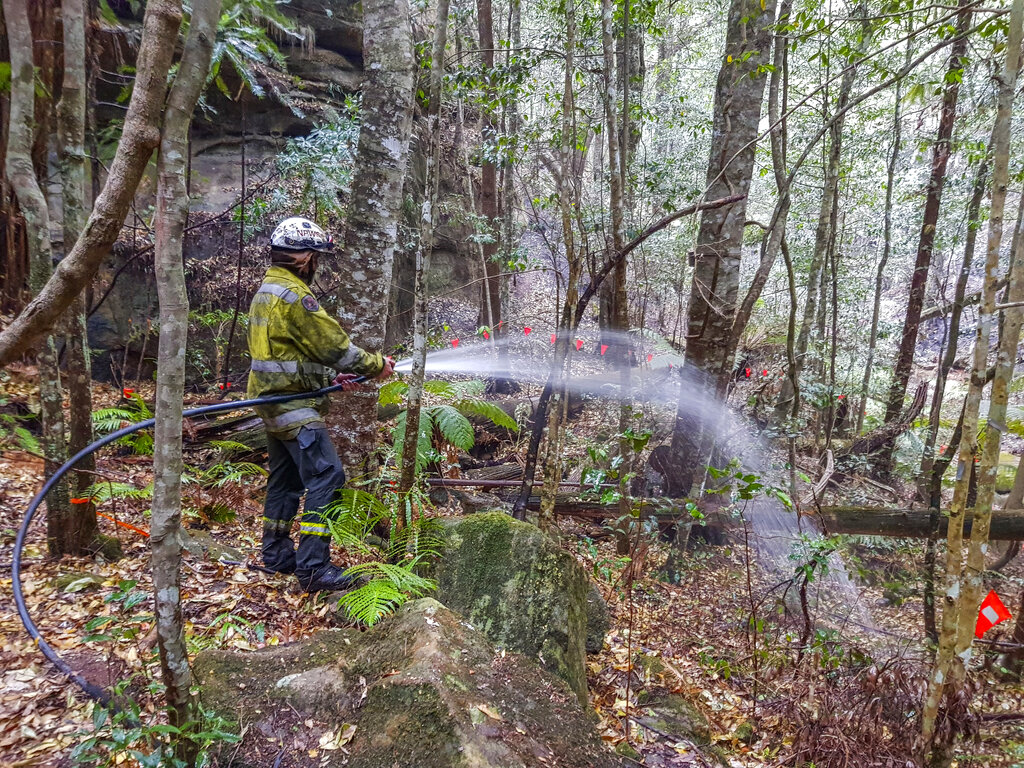
Field measurements likewise indicate that thinned stands may experience higher temperatures, lower fuel moisture, and stronger winds near the ground.
These microclimatic shifts are not trivial. In extreme fire weather — high temperatures, low humidity, strong winds — fuel treatments may be overwhelmed. Even proponents acknowledge diminishing returns as conditions worsen. Australia’s most destructive fires often occur precisely under such extremes.
Another complication is temporal. Treatments degrade over time as vegetation regrows. Maintaining reduced fuel loads requires repeated interventions, which may compound ecological impacts and costs. In landscapes already fragmented by roads and prior disturbances, cumulative effects can be substantial.
Ecological trade-offs
The 2026 perspective emphasizes that thinning is not merely a fire tool but a disturbance in its own right. Removing trees alters habitat structure, especially in forests where large, old trees provide nesting cavities and microclimates essential for wildlife. Such structures can take centuries to develop.
Large-scale thinning can also degrade ecosystem integrity by simplifying forest composition and disrupting successional processes.

The loss of mature trees reduces carbon stocks and may shift species assemblages toward those adapted to more open conditions. Road construction associated with operations can further fragment habitat and alter hydrology.
These concerns are particularly acute in Australia’s temperate eucalypt forests, many of which support species dependent on tree hollows that form only in very old trees. Conservationists argue that removing such trees for firebreaks or “fuel management” undermines biodiversity objectives. Observers in Victoria have reported the destruction of hollow-bearing trees and the death of species such as the greater glider in areas cleared for fire mitigation works.
The ecological stakes extend beyond individual species. Old-growth forests often store disproportionate amounts of carbon and may act as refugia during extreme fires. Mechanical removal of biomass releases stored carbon and may reduce the forest’s capacity to buffer climate impacts.
Fire behavior is not only about fuel
Perhaps the most important insight emerging from recent research is that fire behavior is governed by more than fuel alone. Weather — especially heat, drought, and wind — frequently dominates outcomes.
Studies of wildfire suppression illustrate a related paradox. Aggressively extinguishing low-intensity fires can allow fuels to accumulate, leading to fewer but more severe events later. Modeling suggests that suppression tends to filter out mild fires while leaving only the most extreme to burn, skewing fire regimes toward higher severity.
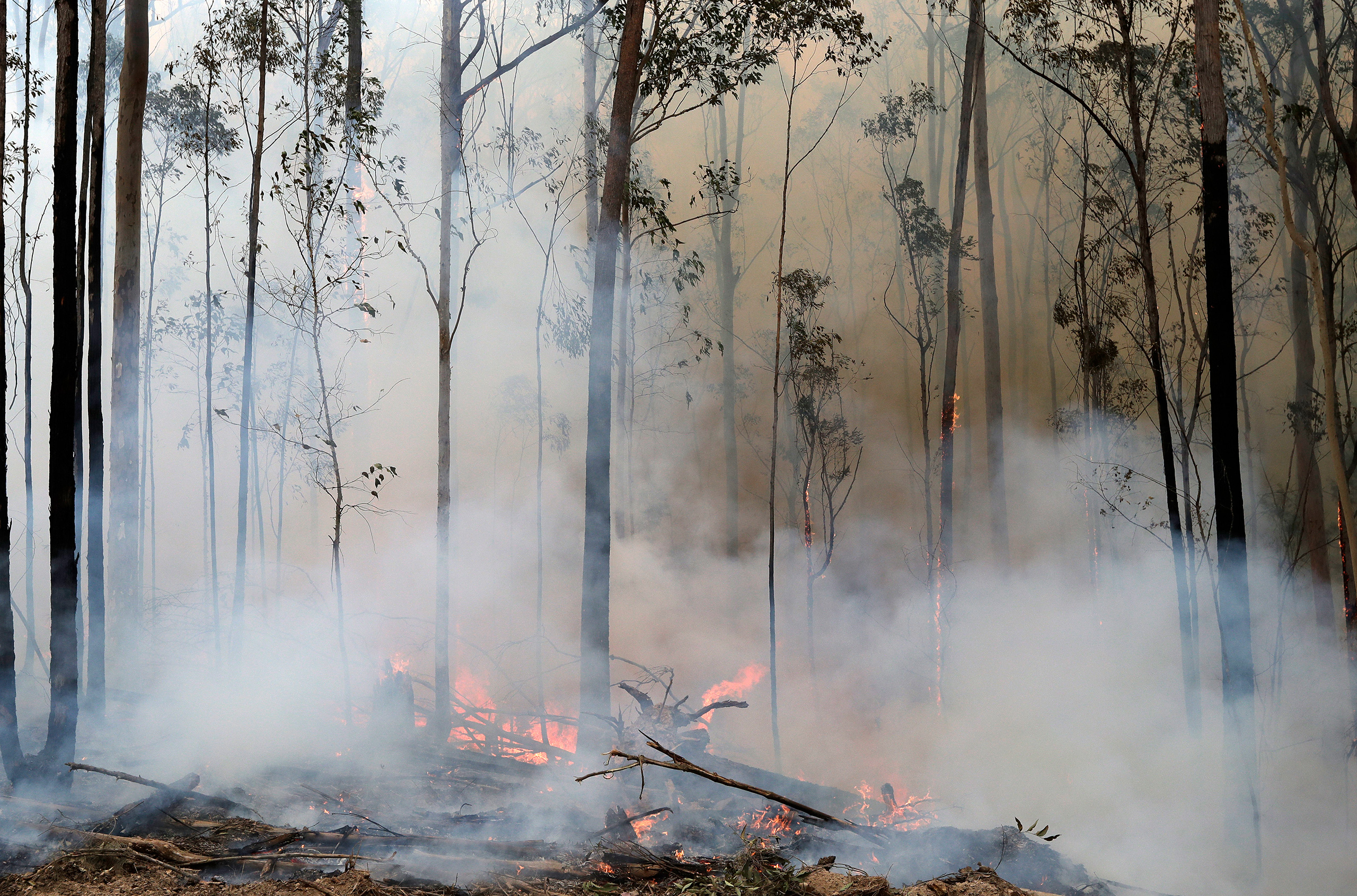
This “suppression bias” underscores how management actions can inadvertently shape future risks.
In Australia, climate change is amplifying fire weather faster than land management can compensate. The Black Summer fires burned across diverse landscapes, including areas that had been logged, thinned, or recently burned. Some research suggests that younger regrowth forests — often the product of past logging — may be more flammable than mature stands, though this remains contested.
Extreme fires also generate their own weather, producing firestorms and ember showers that can leap across treated areas. Under such conditions, the distinction between a thinned and unthinned forest may matter less than proximity to ignition sources and preparedness of nearby communities.
A substitute industry?
Against this scientific backdrop, the political economy of thinning becomes more apparent. The closure of native forest logging in Victoria and Western Australia removed a longstanding industry but not the infrastructure, workforce, or commercial interests tied to it. Thinning programs offer a pathway to maintain operations under a different mandate.
Industry groups frame thinning as stewardship: removing excess biomass to restore “health” and reduce hazards. Conservationists counter that when large trees are cut and transported to mills, the activity is indistinguishable from conventional logging. The debate hinges partly on intent and partly on scale.

Where thinning is targeted near settlements to create defensible space, it attracts broad support. When applied across vast forest areas, skepticism grows. Critics argue that landscape-scale thinning may prioritize timber extraction over risk reduction, especially if treatments occur far from human infrastructure.
The economics are complex. Mechanical thinning is expensive, often requiring subsidies. Timber revenues may offset costs, creating incentives to maximize extraction. Meanwhile, funds allocated to thinning may be unavailable for other measures such as community preparedness, building standards, or early detection systems.
What the evidence suggests
Across the literature, three broad conclusions emerge.
First, thinning can reduce fire severity under certain conditions, particularly when combined with prescribed burning and maintained over time. Second, its effectiveness declines under extreme weather, which is becoming more common. Third, ecological and climate trade-offs can be substantial, especially in high-conservation forests.
These conclusions do not yield simple prescriptions. Forests differ widely, as do fire regimes. What works in dry pine forests may not translate to wet eucalypt ecosystems. The Australian landscape is especially heterogeneous, shaped by millennia of Indigenous fire management followed by two centuries of suppression and industrial use.

The Royal Commission’s review of hazard-reduction measures concluded that no single approach suffices. Fuel management must be integrated with land-use planning, building design, and emergency response.
Toward a more nuanced policy
If thinning is neither cure nor catastrophe, how should governments proceed? Many scientists advocate a shift from landscape-wide fuel reduction toward targeted protection of communities. Creating defensible zones around towns, maintaining evacuation routes, and hardening infrastructure may yield greater safety benefits than broad forest interventions.
Others emphasize restoring more natural fire regimes, including cultural burning practices developed by Indigenous Australians over thousands of years. These methods typically involve small, patchy burns rather than large mechanical treatments.
The Biological Conservation perspective urges careful appraisal of costs and benefits before adopting large-scale thinning as policy. It calls for transparency about ecological impacts and for preserving intact forests as part of climate mitigation strategies.
Living with uncertainty
The resurgence of thinning reflects a deeper anxiety: the sense that fires are becoming uncontrollable. In reality, they always have been to some extent. What has changed is exposure. More people live at the forest edge, and climate change is stretching fire seasons and intensifying extremes.
Mechanical thinning offers the reassurance of action, a visible attempt to impose order on a volatile system. But forests are complex, adaptive systems, not fuel depots awaiting optimization. Interventions can shift dynamics in unexpected ways.

Australia’s experience suggests that policy debates framed as binaries — logging versus preservation, fuel reduction versus biodiversity — obscure the real challenge. Fire management is more about distributing risk than eliminating it: deciding where to intervene, where to retreat, and where to allow natural processes to unfold.
In the end, thinning may prove useful in some places and misguided in others. Its growing prominence as a substitute for native logging reflects economic and political realities as much as scientific ones. As climate pressures mount, the temptation to treat forests as controllable infrastructure will likely intensify.
Whether that impulse produces safer landscapes or new vulnerabilities will depend on how carefully the trade-offs are weighed — and on whether societies are willing to address the drivers of fire beyond the trees themselves.
Banner image: Smoke from a fire in Far North Queensland, Australia. Photo by Rhett A. Butler.
Citations:
- Lindenmayer, D.; DellaSala, D.A.; Bowd, E.; Law, B.E.; Burton, P.J.; Hanson, C.T.; Zylstra, P.; Ripple, W.J. (2026) Ecological trade-offs of mechanical thinning in temperate forests. Biological Conservation 316, https://doi.org/10.1016/j.biocon.2026.111748.
- Brodie, E.G., Knapp, E.E., Brooks, W.R. et al. (2024) Forest thinning and prescribed burning treatments reduce wildfire severity and buffer the impacts of severe fire weather. Fire Ecology 20, 17. https://doi.org/10.1186/s42408-023-00241-z
- — (2020). Background Paper: Land management – hazard reduction: a literature review. The Royal Commission into National Natural Disaster Arrangements. 978-1-921091-16-2
- Banerjee, T. Impacts of Forest Thinning on Wildland Fire Behavior. Forests 2020, 11, 918. https://doi.org/10.3390/f11090918
- Whitehead, R.J., G.L. Russo, B.C. Hawkes, S.W. Taylor, B.N. Brown, O.B. Armitage, H.J. Barclay, and R.A. Benton (2008). Effect of commercial thinning on within-stand microclimate and fine fuel moisture conditions in a mature lodgepole pine stand in southeastern British Columbia. Natural Resources Canada, Canadian Forest Service, Victoria, British Columbia. Canadian Forest Service Canadian Wood Fibre Centre Information Report FI-X-004
- Lindenmayer, D., Dominick A. DellaSala, Elle Bowd, Beverly E. Law, Philip J. Burton, Chad T. Hanson, Philip Zylstra, William J. Ripple (2026). Ecological trade-offs of mechanical thinning in temperate forests. Biological Conservation, Volume 316, 111748, ISSN 0006-3207. https://doi.org/10.1016/j.biocon.2026.111748
- Kreider, M.R., Higuera, P.E., Parks, S.A. et al. (2024) Fire suppression makes wildfires more severe and accentuates impacts of climate change and fuel accumulation. Nature Communications 15, 2412. https://doi.org/10.1038/s41467-024-46702-0
- Lindenmayer, D., Philip Zylstra, Chad T. Hanson, Diana Six, Dominick A. DellaSala (2025). When Active Management of high conservation value forests may erode biodiversity and damage ecosystems. Biological Conservation, Volume 305 111071, ISSN 0006-3207, https://doi.org/10.1016/j.biocon.2025.111071
Credits