After 25 years of covering corporate sustainability, it’s more complicated than ever
Written by admin on January 2, 2026
We’ve just concluded our 25th year since the website GreenBiz.com — now Trellis.net — debuted: “The Resource Center on Business, the Environment and the Bottom Line,” read its tagline at the time. We’ve now been covering sustainable business for a quarter century — not quite since the beginning of the era, but still from its earliest days.
The journalists and analysts at Trellis — complemented handily by a sizable community of practitioners willing to share their ideas, perspectives and insights — have produced more than 25,000 articles during that time. And throughout, we’ve continually assessed the scope, veracity and impact of what we do and how we do it.
In many ways, just like our readers.
It hasn’t been easy. Sustainable business journalists have long struggled to get it right — the right mix of stories, of course, but also the right tone, balance and level of depth. There were no halcyon days when sustainable business journalism was easy, popular or uncontroversial. Nearly everything has been subject to punishing scrutiny, whether from activists, companies, investors, political point-scorers, watchdog groups, regulators or a corps of self-appointed sentinels.
If you get it mostly right, you find yourself as we have: scrutinized and criticized but generally respected by all sides.
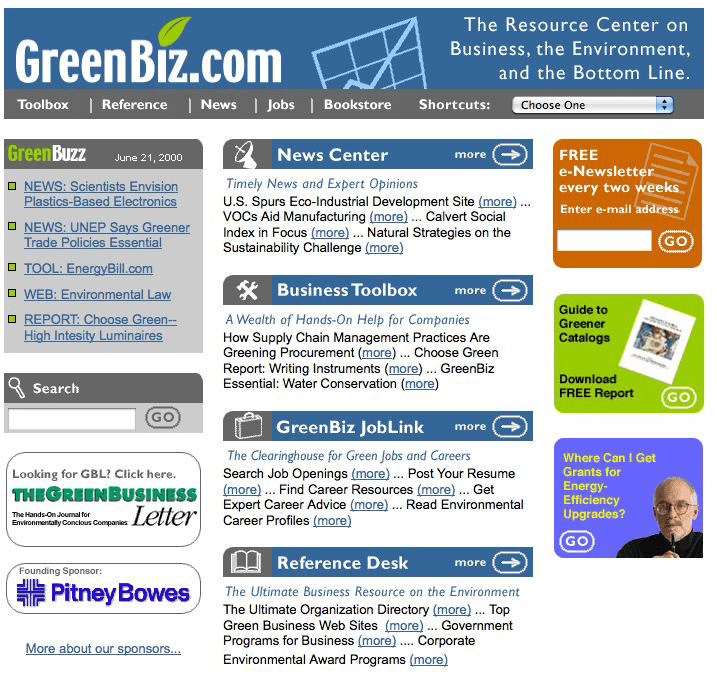
At this 25-year juncture, I’ve been reviewing the trajectory of sustainable business reporting, including revisiting some of our earliest stories. It’s a bit like looking at an old picture of yourself and wondering what that “you” was really like back then. And how different things might be to have known then what you know now.
Capturing eyeballs and clicks
The evolution of sustainable business journalism roughly paralleled that of the internet, where “content” became cheap and ubiquitous, and where capturing “eyeballs” and clickthroughs required ever-spicier headlines and lede sentences.
More recent years saw the emergence of social media where, um, content needed to be bite-sized and sometimes salacious. Then came the tsunami of narrative podcasts, live online interviews, carousel storytelling, video explainers, micro-series and “snackable reports” (trust me, they’re a thing), among other novel formats.
Each added new opportunities and challenges for reporters and editors, requiring “journos” — shorthand for journalists in an era of bite-sized attention spans — and their publications to adjust their reporting and publishing strategies.
Now, in the era of AI, many such strategies are being cast aside as algorithm-based technology radically transforms how information is created and consumed, and who creates it and their agendas, if any.
It’s enough for an old-school journo like me to pine for the simpler world of blue pencils and bulldog editions.
Meanwhile, the business of sustainability has evolved from a largely engineering-centric profession into one confronting an atmospheric river of trends and terms: triple bottom line, eco-efficiency, stakeholder engagement, corporate citizenship, corporate social responsibility, shared value, carbon neutrality, double materiality, ESG, decarbonization, nature-positive, carbon-negative, circular economy, just transition and many others.
All in just the past 25 years.
Three eras of coverage
Amidst all this, how has media coverage changed? I view the past quarter century in three eras, which parallel the trajectory of sustainable business itself.
2000-2005: Shallow but earnest. Early reporting focused on mostly small, self-reported activities: a company phasing out polystyrene foam packaging “peanuts” from its shipping department, for instance. A name-brand company publishing its first-ever environmental report could become a headline-grabbing moment.
There was relatively little effort by reporters to peel back the covers to understand what was behind these stories. Sustainable business (it wasn’t even called that yet) was sufficiently novel that nearly everything seemed worthy of covering, if not cheerleading.
2005-2015: Less shallow, more serious. Reporting grew deeper, with more-experienced journalists examining meaningful changes in companies’ products, processes and operations. We started to focus not just on the “what” but also the “how” and “why” of company initiatives.
There was more effort taken to explain the nuts and bolts of what’s needed to nudge a company in a more sustainable direction: how increased transparency and disclosure, for example, could improve company operations; the challenges of accurately measuring and reporting a firm’s carbon footprint; the use of biotechnology and biomimicry to find less-problematic ingredients for everything from biofuels to blue jeans.

How we looked in 2020.
2015-2025: Serious and deeper. Heightened scrutiny and politicalization, in tandem with more ambitious corporate initiatives, pushed reporters to ask more probing questions: Can companies truly offset their way to carbon neutrality? Is hydrogen a viable transportation fuel? Does ESG investing actually move companies and markets?
Trellis’s Chasing Net Zero series represents a prime example of reporters digging deep to answer a seemingly simple question: What does it take for a company to dramatically reduce or eliminate its greenhouse gas emissions? The answer turns out to be far from simple. Trellis reporters use a detailed methodology to assess how specific companies across multiple sectors are faring. The complexity of these stories reflects the growing sophistication of sustainable business journalism overall.
Four challenges ahead
Today, we face both new and continuing challenges, among them:
- An evolving media landscape. Journalism now straddles two worlds: traditional balanced reportage and a digital, AI-enabled free-for-all, where a story dismissed as “fake news” might actually be accurate and where seemingly authoritative stories can turn out to be anything but. Publishing today requires balancing the consequential with the click-worthy, not to mention pairing context with clarity.
- Nuanced stories. As coverage goes deeper into company operations, the risk grows that complexity becomes oversimplified. For example, a story about a company restoring forests and protecting Amazonian biodiversity requires knowledge of land use; measurement, reporting and verification; and development finance, not to mention supply chains and Indigenous rights — but may be reduced by inexperienced writers and editors to merely “planting trees.”
- An uneven playing field. Some companies gush a steady stream of announcements and proactively court reporters and editors. As a result, such well-known brands as Amazon, Google, IKEA, Microsoft, Nike, Salesforce, Unilever and Walmart seem to appear disproportionately more frequently in stories, including ours (according to my unscientific survey). They can receive an outsized share of coverage even though their more circumspect peers may be doing as much or more.
- Finding balance. An evergreen challenge is determining the appropriate point of view for a given story: Do we criticize the leaders, always imperfect, or cheer them on? Do we lambaste the laggards or write encouragingly about their baby steps? Is an even-handed approach always fair to readers? We continue to strive to tell stories in a way that meets readers’ growing sophistication — and their perpetually shrinking attention spans.
For today’s journalists and editors, there is no unified theory of how to cover sustainable business — only our instincts, experience, expertise and the abiding conventions of journalism. That’s what’s carried us for the past 25 years and what will propel us forward.