George Winston, the performer behind the melancholy classic December, died this week.
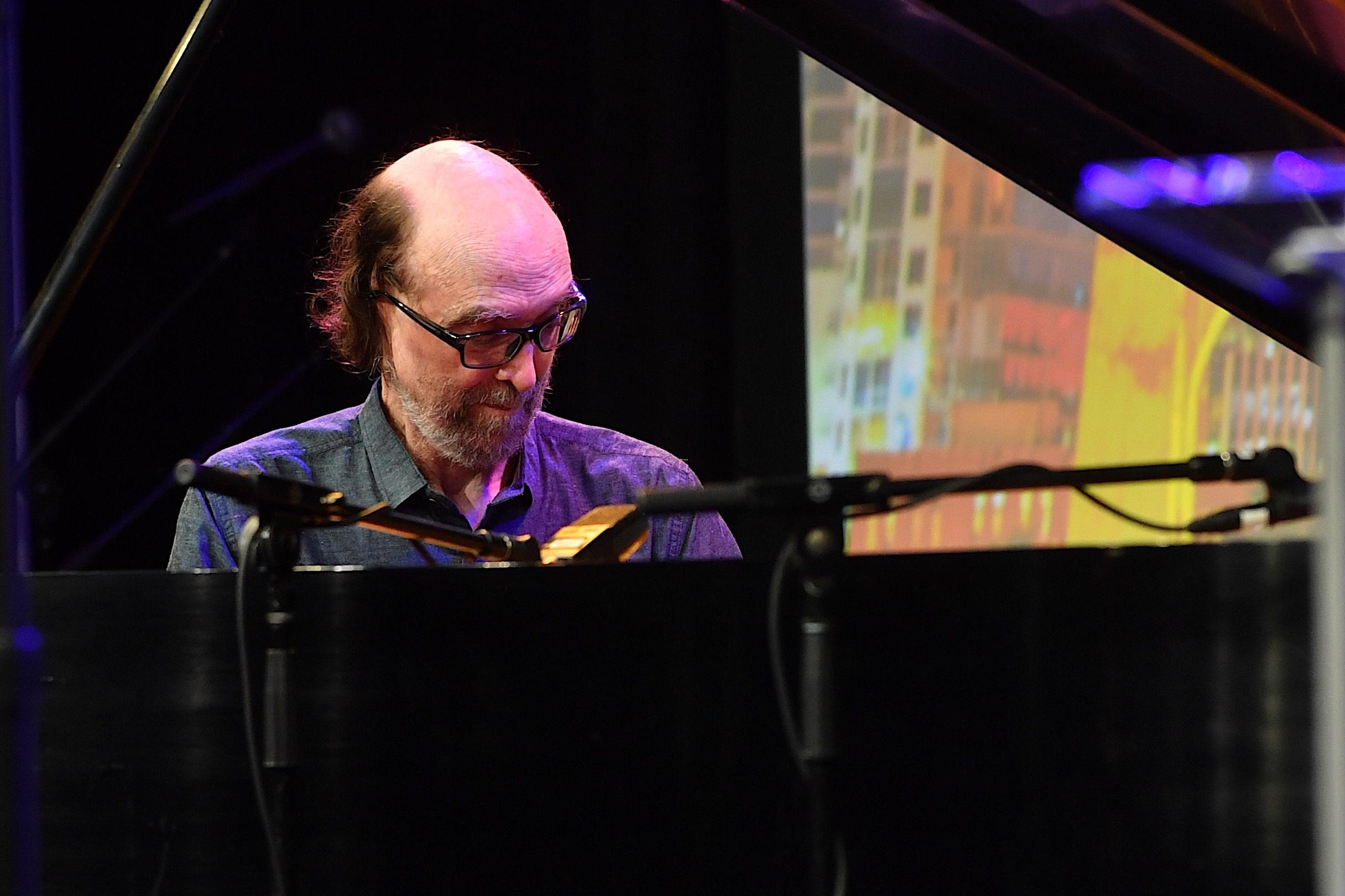
Jason Davis/Getty Images
You can probably hear it now: the repeated piano pattern shimmering through the air, DUN da-da dun, DUN da-da dun, like a carillon, the bass notes descending, ding, dong, ding, dong. The song gets faster and faster, like a blizzard blowing in, yet its mood is not frantic—it’s ruminative. When the song winds down at last, it brings the peace of a freshly snow-covered landscape, twinkling in the moonlight.
George Winston’s solo piano album December sold over 3 million copies in the 1980s and 1990s, and its centerpiece was his interpretation of the traditional “Carol of the Bells.” Winston, who died earlier this week at the age of 74, recorded his first album with John Fahey in the early 1970s, but it wasn’t until an encounter with Windham Hill Records founder Will Ackerman in the early 1980s that Winston found his audience. Ackerman recalled meeting Winston in a Santa Monica guitar shop and then heading over to his house to jam. “I actually went to sleep as he was playing the piano,” Ackerman told me in a recent interview. “When I woke up, I asked him, ‘Hey, what was that?’ ” Ackerman signed Winston to the label and convinced him to release piano music rather than Winston’s preferred guitar.
The spare, crystalline solo piano albums Winston recorded for Windham Hill were sold by slightly baffled 1980s retailers as “New Age,” but there wasn’t really anything mystical about them; really, they were folk songs. Winston’s interests lay in various regional American musical styles, like New Orleans stride piano and Hawaiian slack-key guitar, and his albums reflected that interest. They sounded impeccable, but you could imagine many of the compositions being played a hundred years ago or more in some Appalachian parlor. For me, they were an introduction to quiet, contemplative music that led me, eventually, in many directions: to other Windham Hill artists like guitarists Ackerman and Michael Hedges; to the Hawaiian slack-key performers Winston championed on his own label; to electronic ambient music by Brian Eno; to Keith Jarrett’s Köln Concert album, the elegant design of which inspired Windham Hill’s distinctive aesthetic.
Though two other Winston albums went platinum and a later record won a Grammy, it was December that ended up on the CD towers of everyone I knew in the 1990s—often the one non-rock or non-rap album in a person’s entire collection. You broke the CD out at Christmastime, but not when everyone was celebrating—it wasn’t a jolly album of carols, to be sung in a group. It wasn’t even “Silent Night,” a somber carol to sing with loved ones by candlelight. It was an album to play alone, during the ruminative hours late at night, sitting by a lit tree, having one last drink before you go to bed. It was an album for the holiday sads.
“Carol of the Bells” exemplifies that spirit, and I think it’s not an accident that after December’s release, that song grew into a holiday standard, with a John Williams adaptation soundtracking Home Alone and versions performed by holiday-music powerhouses like Mannheim Steamroller and Pentatonix. But none of those carols have the simplicity or clarity of Winston’s, and none of them find the melancholy at its center. A Facebook post by Wilco guitarist Nels Cline, an old friend, lays bare the way Winston’s 1980s success isolated him, and the pianist struggled with cancer for the last decade-plus of his life. It’s not hard to hear sadness and even loneliness in the music that made him famous; indeed, it’s music you listen to when you want to gingerly touch the edges of your own sadness and loneliness.
But there’s beauty in melancholy, too. After the repetitive pattern of “Carol of the Bells” slows, you think the song might be over. But then three beautiful chords chime from Winston’s piano, followed by a twinkling flourish. Those final notes echo and shimmer, as if a sharp breeze has blown the midnight snowfall into a dazzling final whirl, before all settles into stillness.