New Drug Stalls Alzheimer’s Development in Breakthrough Trial
Written by admin on December 23, 2025
Brain support cells called astrocytes are key to the new research. (Juan Gaertner/Science Photo Library/Getty Images)
Growing evidence suggests that the key to treating Alzheimer’s is catching it in its earliest stages. Now scientists have developed a promising new drug that seems to be effective at stalling the disease before it really gets started.
The drug is called NU-9, and a team from Northwestern University in the US tested it on mouse models of Alzheimer’s disease. They found that it’s able to significantly lower the levels of toxic protein molecules called amyloid beta oligomers, which can aggregate into the harmful plaque clumps associated with Alzheimer’s.
With NU-9 deployed, far fewer of these oligomers were detected in the mouse brains. This in turn kept brain support cells called astrocytes in a calmer, healthier state.
Related: Microdosing Cannabis Pauses Alzheimer’s Decline in Unprecedented Trial
“These results are stunning,” says neurobiologist William Klein.
“NU-9 had an outstanding effect on reactive astrogliosis, which is the essence of neuroinflammation and linked to the early stage of [Alzheimer’s] disease.”
This study wasn’t just about examining the impact of NU-9, though: it was also about improving our understanding of how Alzheimer’s develops, long before any symptoms appear, which is likely to be crucial in researching new treatments.
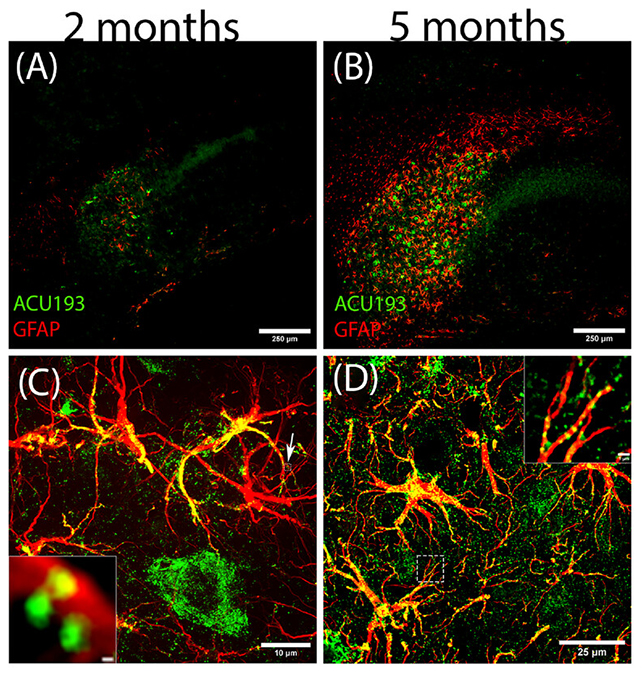
In the mice used in the study, the researchers discovered a previously unknown subtype of amyloid beta oligomer. They called it ACU193+, and found it was one of the first to show up in stressed neurons, attaching itself to astrocytes.
While astrocytes are crucial to a smoothly operating brain, they can also become dangerous if they get overactive. The scientists behind the study think ACU193+ could trigger this transition – and give us a potential way to slow it down.
“Alzheimer’s disease begins decades before its symptoms appear, with early events like toxic amyloid beta oligomers accumulating inside neurons and glial cells becoming reactive long before memory loss is apparent,” says Northwestern neuroscientist Daniel Kranz.
“By the time symptoms emerge, the underlying pathology is already advanced. This is likely a major reason many clinical trials have failed. They start far too late.”

It’s worth bearing in mind that there’s still a way to go before we can be sure that amyloid beta – in either oligomer or plaque form – is directly driving Alzheimer’s. It’s probable that multiple triggers and factors are involved.
NU-9 has previously been shown to prevent amyloid beta oligomer build-up in human brain cells in the lab, so is encouraging to see that it seems to also work in live animals.
More testing is now underway: the researchers are looking at how effective NU-9 is in an animal model of Alzheimer’s disease in a later stage of progression, which is thought to better reflect how it takes hold in people as they age.
Only after all that could it potentially progress to human clinical trials.
If all goes as hoped, NU-9 could become a preventative treatment that can be taken by people at high risk of developing Alzheimer’s later in life. The researchers compare it to cholesterol-lowering drugs that are taken to reduce the risk of heart disease.
“If someone has a biomarker signaling Alzheimer’s disease, then they could start taking NU-9 before symptoms appear,” says Klein.
“There are a couple of early diagnostic blood tests for Alzheimer’s disease in development. The promise of better early diagnostics – combined with a drug that could stop the disease in its tracks – is the goal.”
The research has been published in Alzheimer’s & Dementia.