Social Media Impersonation: How to Detect, Prevent, and Respond for Real Impact
Written by admin on October 29, 2025
Social media impersonation happens when someone creates fake or cloned profiles to pretend they’re someone else, often to scam or harm reputations. It’s a real threat that can damage brands, individuals, and organizations alike.
We all face this risk, whether we’re influencers, business owners, or everyday users. Understanding how impersonation works and what to do about it can save us from financial loss, stress, and trust issues.
Keep reading to learn practical steps you can take right now to protect yourself and your community.
Key Takeaways
- Social media impersonation involves fake profiles that mimic real people or brands to commit fraud or cause harm.
- Prevention includes monitoring profiles, using strong security like two-factor authentication, and educating everyone involved.
- Quick, clear actions to report impersonation and manage fallout help minimize damage and restore trust.
Understanding the Threat: The High Stakes of Social Media Impersonation
Source: Cyber Security Agency of Singapore
Impersonation on social media isn’t just a nuisance; it’s a threat with real consequences. One in five social media users faces hacking attempts each year, many tied to impersonation tactics.
The Federal Trade Commission reported over $1.1 billion lost to these scams in 2023 alone. The rise of AI deepfake technology has made spotting fakes harder, pushing the problem into new territory.
At its core, social media impersonation means creating fake profiles or cloning existing ones. This can be as simple as stealing photos and bios or as complex as hijacking verified accounts.
The motives vary: financial scams, phishing, harassment, misinformation, or just to damage reputations.
The impacts are severe:
- Reputational Damage: False posts or fake endorsements can ruin personal or brand images overnight.
- Financial Fraud: Scammers often ask for money or steal sensitive info, leading to real losses.
- Emotional Toll: Victims feel violated, anxious, and stressed knowing someone’s misusing their identity.
Understanding these stakes helps us realize how urgently we must act.
Defining Social Media Impersonation and Its Malicious Intent
Social media impersonation is about more than just fake accounts. It’s a deliberate effort to deceive others by pretending to be someone else online. This includes:
- Personal impersonation (friends, celebrities)
- Brand and business impersonation
- Executive or employee impersonation
- Political impersonation
Among these, brand impersonation is one of the most damaging forms, as fake business profiles can mislead customers, launch scams, or spread misinformation using a company’s name and logo.
The goal is usually to trick followers or customers into trusting the fake profile, often to commit scams or spread false information.
The Growing Impact: Financial, Reputational, and Emotional
The consequences ripple far beyond just the online space. Financially, companies report an average $200,000 loss per cyberattack involving social accounts.
Fake profiles can confuse customers, ruin trust, and spark public relations crises. For individuals, the emotional strain can be overwhelming, causing stress and even mental health issues.
Specific Reputation Threats & Concepts in Social Media Impersonation

Social media impersonation doesn’t just risk stolen identities; it strikes directly at reputation, the core of personal and brand value online.
Fake profiles can spread misleading or damaging information, confuse customers with false promotions, or create fake endorsements that erode trust.
When impersonators hijack executive or employee accounts, they expose organizations to fraud and misinformation that ripple through public perception. To understand these risks in more depth, explore specific reputation threats and concepts that shape how online identities are manipulated tod
Key reputation threats include:
- Fake Social Media Giveaways: Luring followers with scams tied to your name.
- Fake Customer Support Profiles: Tricking users into sharing private details.
- Misinformation Campaigns: Using cloned profiles to spread false news or harmful narratives.
Understanding these threats highlights why vigilance matters. Every fake account can chip away at credibility, making early detection and quick response essential to protect reputation from lasting harm
Proactive Defense: Steps to Prevent Social Media Impersonation
Stopping impersonators before they cause harm is the smartest move. We can’t just wait for trouble to show up. Staying alert and proactive is key(1).
Monitoring for Fake Profiles and Accounts
It’s not enough to hope fake accounts won’t sprout up. We must regularly check for them ourselves and use tools to help.
- Manually search social platforms for duplicates or suspicious profiles.
- Use social listening tools that track mentions and brand names.
- Set Google Alerts for your name or company to catch new mentions quickly.
These steps give us early warning signs and let us act fast.
Strengthening Account Security Measures
Good security practices cut the risk sharply. Two,factor authentication (2FA) especially is a must,it adds an extra lock beyond passwords. Changing passwords regularly and using a password manager help keep accounts safe from hacking attempts.
You can also reduce exposure by cleaning up personal data online through data broker removal services, which prevent impersonators from accessing private information that can be used to clone your identity.
Educating Stakeholders: Employees and Customers
Everyone connected to your brand or profile should know how impersonation works and how to spot it.
Training helps employees recognize phishing attempts and fake messages. Customers who know what to watch for are less likely to fall for scams. Building a culture of awareness is a powerful shield.
Incident Response: What to Do When Impersonation Occurs
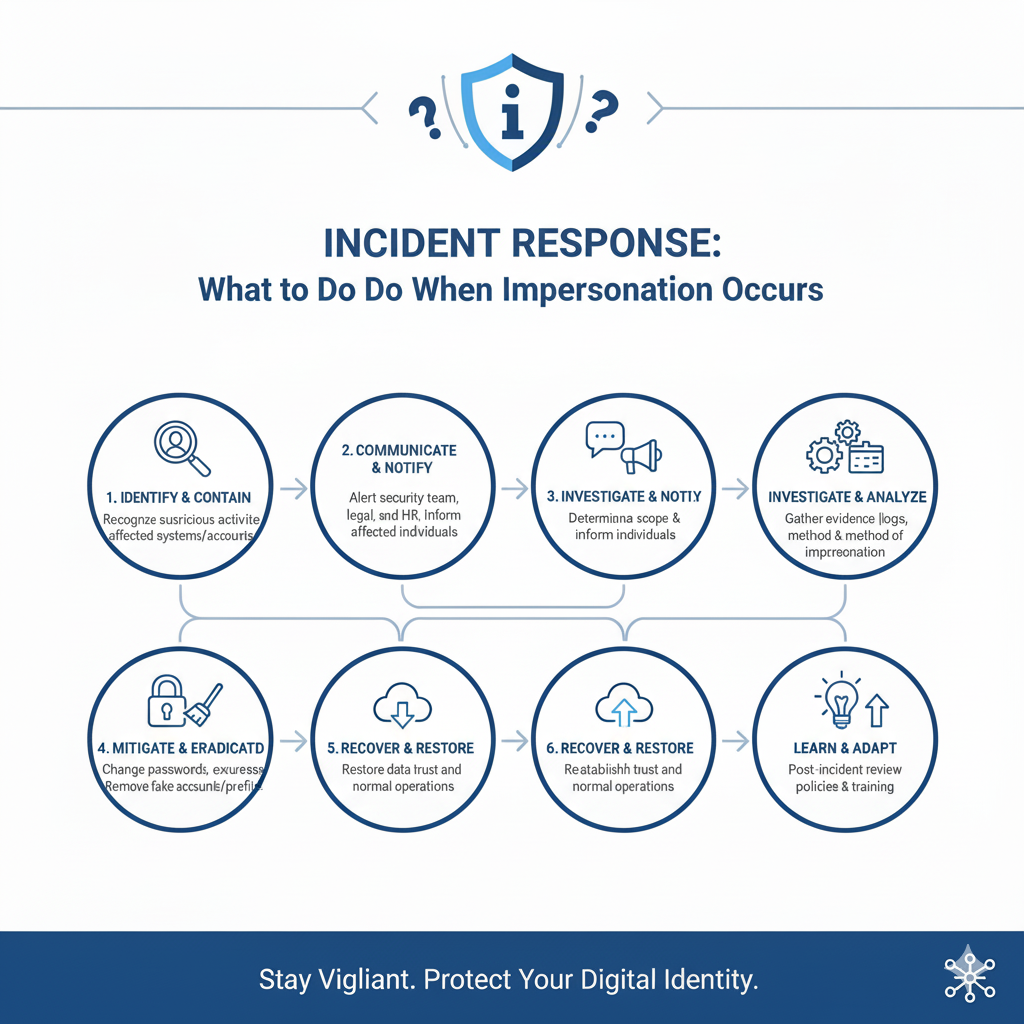
Even with all the precautions and safeguards in place, social media impersonation can still happen. When it does, how we respond can make a huge difference in limiting the damage and regaining control. The key is to move quickly and methodically (2).
Immediate Actions to Take
Spotting a fake profile that’s pretending to be you or your business can be alarming. The first instinct might be to panic or ignore it, but that only gives the impersonator more time to cause harm. Instead, take these steps right away:
- Report the Impersonation to the Platform
Every major social media platform provides a dedicated page or tool to report impersonation. This is your first line of defense.
Reporting promptly triggers the platform’s review process, which often leads to the removal or suspension of the fake account.
Make sure you provide all necessary information clearly, links to the fake profile, descriptions of the impersonation, and any proof you have.
- Notify Your Community and Stakeholders
Once you’ve reported the fake profile, it’s important to inform those who might be affected.
Customers, employees, followers, and partners should know about the impersonation so they don’t fall victim to scams or misinformation coming from the impostor.
Transparency builds trust and prevents confusion if the fake account is actively messaging or posting harmful content.
- Document Every Detail
Gather and save as much evidence as you can. Screenshots of the fake profile, copies of suspicious messages or posts, URLs, and dates of activity are critical.
This documentation supports your report to the platform and can be invaluable if you need to escalate the issue legally.
Sometimes platforms ask for proof to act quickly, so having everything organized speeds up the process.
Additional Steps to Consider
- Contact Legal Counsel if Necessary
If the impersonation involves fraud, defamation, or serious harm, consulting a lawyer experienced in cybercrime or intellectual property can help guide next moves.
Legal professionals can assist with cease and desist letters, DMCA takedown requests, or pursuing claims for damages.
- Communicate with Your Audience Publicly
In some cases, issuing a public statement on your verified social accounts or website clarifies the situation.
It reassures your audience that you’re aware of the problem and taking steps to fix it. This can prevent rumors from spreading and restore confidence.
- Monitor for Follow-Up Impersonation Attempts
Impersonators often try again or create multiple fake accounts. Keep an eye out for new suspicious profiles even after one is taken down.
Using brand monitoring tools or social listening platforms helps detect these quickly so you can report them without delay.
- Review and Strengthen Security
An impersonation incident can reveal vulnerabilities in your digital defenses.
After resolving the immediate threat, review your security settings, check for account breaches, and reinforce protections like two-factor authentication. This reduces the chance of repeat attacks.
Responding effectively to social media impersonation requires calm, quick action and clear communication. While it can feel overwhelming, following these steps helps protect your reputation, limit financial risks, and maintain trust with your community. The faster and more thoroughly you respond, the better your chances of putting impostors behind you.
Legal and Public Relations Considerations
Sometimes it’s necessary to consult legal counsel, especially if impersonation leads to fraud or defamation. Managing public perception is equally important.
A clear, honest public statement can reassure your audience and reduce confusion. Handling the aftermath carefully helps protect your reputation while the platform deals with the fake account.
What We Can Do About Social Media Impersonation

Social media impersonation is a serious threat but not unbeatable. It requires attention, effort, and sometimes teamwork.
We can reduce risks dramatically by staying vigilant,monitoring platforms, boosting security, and educating everyone involved. When impersonation does happen, responding swiftly with reports and communication helps limit harm.
Above all, remember that this problem is evolving. New AI tools make fakes look more real, so our defenses must keep up. Using professional services for reputation and brand protection is worth considering if impersonation becomes persistent or damaging.
We all share responsibility for maintaining trust and safety online. Taking these practical steps today means fewer headaches and safer experiences tomorrow. Let’s keep our digital communities authentic, secure, and trustworthy.
If you suspect a fake profile or impersonation, don’t wait,report it through the platform’s official channels immediately. Stay informed and prepared to protect yourself and others.
FAQs
What is social media impersonation and why does it matter?
Social media impersonation is when someone creates a fake profile pretending to be another person, brand, or organization.
It matters because these fake accounts can deceive followers, steal sensitive information, or damage reputations.
Impersonation often leads to financial scams, identity theft, and trust issues, affecting individuals and businesses alike. Recognizing its impact helps us stay alert and take steps to protect our digital presence and the communities connected to us.
How can I spot a fake social media profile impersonating me or my brand?
Look for profiles with duplicate photos or bios, suspicious activity, or sudden changes in tone. Warning signs include messages asking for money or personal information, inconsistent posting patterns, or lack of verification badges.
Fake profiles often have few followers or friends and may use usernames slightly different from the real one. Regularly monitoring your name and brand online with social listening tools can help catch these imposters early.
What are the common motivations behind social media impersonation?
Most impersonators aim to commit financial fraud, steal personal data, or damage reputations. Some seek to spread misinformation or execute social engineering scams by gaining trust under false pretenses.
Others might impersonate public figures or brands to exploit followers for money or influence. Understanding these motivations helps us recognize the tactics used and strengthens our efforts to prevent and respond to impersonation attempts.
Which platforms are most affected by social media impersonation?
Popular platforms like Facebook, Instagram, X (formerly Twitter), LinkedIn, TikTok, and YouTube are common targets for impersonation due to their large user bases and influence.
Each platform has unique vulnerabilities and reporting mechanisms, but the threat exists everywhere users share personal or brand information.
Staying vigilant across all active profiles is essential to protect against impersonators who exploit these widely used networks.
What steps can I take to prevent my social media accounts from being impersonated?
Start by enabling two-factor authentication and using strong, unique passwords managed by a password manager. Regularly monitor your accounts and search for fake profiles mimicking your identity.
Educate employees and customers about phishing scams and impersonation tactics.
Trademark monitoring and proactive account verification add extra layers of protection. Staying informed about emerging impersonation techniques, like AI deepfakes, also helps you adapt your defenses effectively.
How do I report a social media impersonation incident?
Each platform provides a dedicated reporting page for impersonation. You should gather evidence like screenshots and URLs before submitting your complaint.
Clearly explain how the account is impersonating you or your brand, and provide all requested information to speed up review. After reporting, notify your followers and stakeholders to warn them.
Prompt reporting helps platforms take down fake profiles quickly and limits potential damage.
What legal options are available if I’m a victim of social media impersonation?
Legal recourse may include filing complaints for defamation, fraud, or trademark infringement. You can also pursue DMCA takedown requests if copyrighted content is stolen. Consulting a lawyer experienced in cybercrime or intellectual property law helps determine the best course of action.
Local law enforcement might get involved in serious cases. Acting swiftly with legal support often strengthens your case and can deter impersonators from causing further harm.
How does social media impersonation affect brand reputation?
Impersonation can erode trust by confusing customers with fake promotions, false endorsements, or misleading posts.
It can spark public relations crises and negative media coverage.
When customers doubt authenticity, they might stop engaging or buying from the brand.
The damage often extends beyond social media, hurting overall brand value and revenue. Protecting your brand’s digital identity is critical to maintaining credibility and customer loyalty.
What tools can help detect and monitor social media impersonation?
Social listening platforms like Mention or Brandwatch track brand mentions and alert you to suspicious activity.
Reverse image search helps find stolen photos used in fake profiles. Platform verification badges indicate authentic accounts. Google Alerts can monitor your name or brand across the web.
Combining these tools with manual checks and cybersecurity services enhances early detection and quick response, preventing impersonators from gaining traction.
How can educating employees and customers reduce the risk of impersonation scams?
Training employees and customers to recognize phishing, suspicious messages, and fake profiles builds a strong first line of defense. Awareness helps them avoid sharing sensitive information or engaging with impersonators.
Education promotes a culture of vigilance and encourages prompt reporting of suspicious activity.
When everyone knows what to watch for, impersonation attempts are less likely to succeed, protecting both individual users and the broader community from fraud and misinformation.
Conclusion
Dealing with social media impersonation is a challenge we can’t ignore. It threatens our identity, finances, and peace of mind. But by staying alert, securing accounts, and educating those around us, we can fight back effectively.
To further strengthen your brand’s online credibility and ensure your authentic voice stands out, consider using NewswireJet, a trusted press release distribution platform that helps businesses gain visibility on major outlets like NBC, CBS, Google News, and Yahoo. B
Quick action when impersonation happens limits damage and helps restore trust. Social media safety depends on all of us being proactive and informed.
Let’s keep our digital presence genuine and protect what we’ve built, because online trust isn’t something easily regained once lost.
References
- https://en.wikipedia.org/wiki/Proactive_cyber_defence
- https://medium.com/perception-point/the-art-of-impersonation-c7b7bd464da8